Grammar for sentence transformations
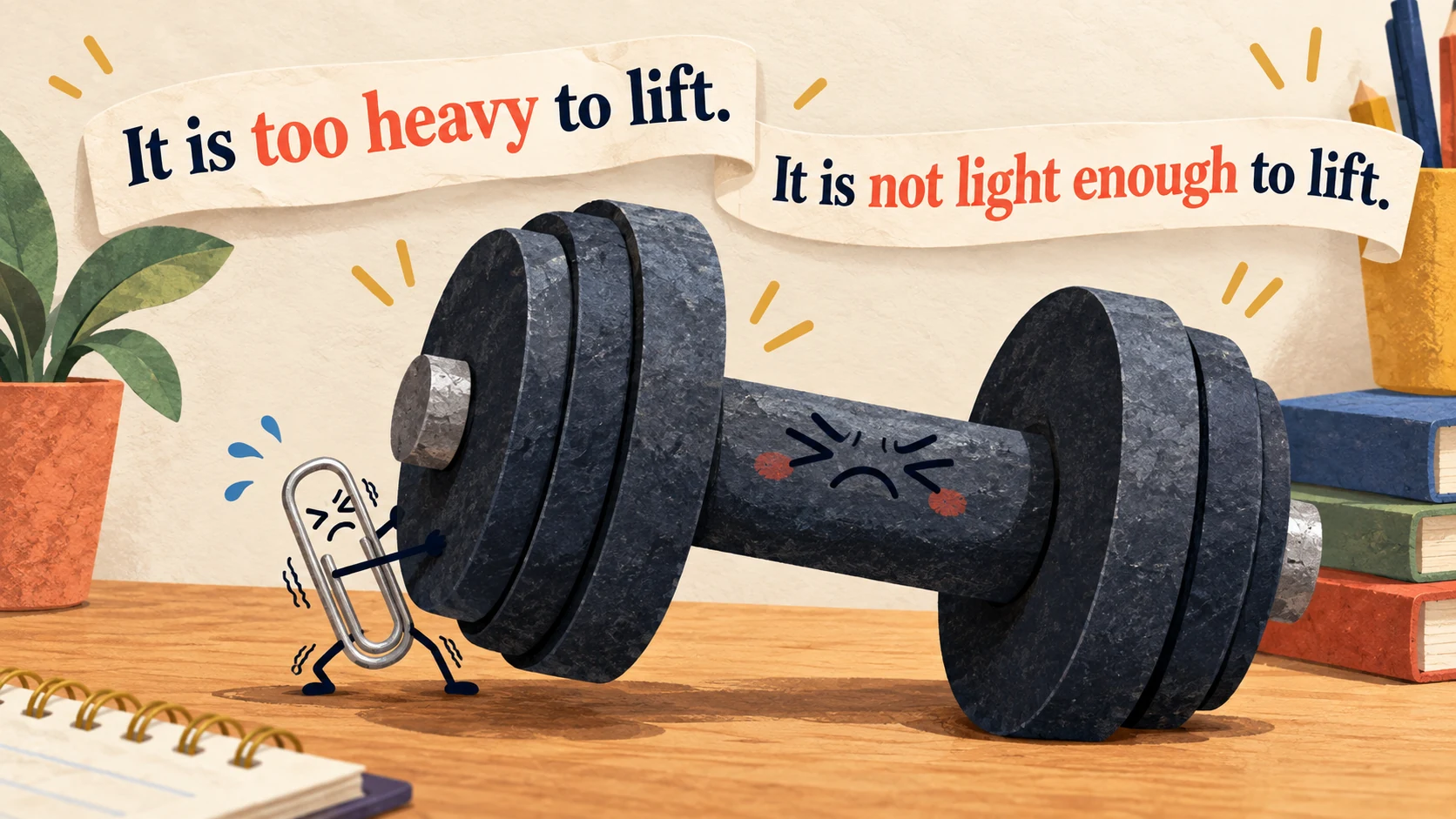
In a sentence transformation task, you rewrite a sentence using a given word or structure while preserving its meaning. The challenge is not to copy the original vocabulary; it is to recognise the grammar relationship underneath it.
Original: It was too cold for us to swim.
Rewrite: It wasn’t warm enough for us to swim.
The wording changes, but the practical meaning remains: swimming was not possible because of the temperature.
Read the whole task before writing
In Cambridge B2 First Part 4, candidates complete a second sentence using a key word, keeping that key word unchanged and writing between two and five words in the gap. The exact task instructions always take priority. Before filling the gap, identify what must stay the same: time, subject, positive or negative meaning, and degree of certainty.
A quick example:
Original: I last saw Noor in March.
Key word: SINCE
Rewrite: I haven’t seen Noor since March.
The present perfect gives the period from March until now. The key word is unchanged and the meaning stays anchored to the same last meeting.
Recognise common grammar families
Many transformations test a relationship rather than a rare word:
- Too / enough: The bag was too heavy for me to carry → The bag wasn’t light enough for me to carry.
- Active / passive: They built the theatre in 1998 → The theatre was built in 1998.
- Reported speech: “I’ll call,” Jo said → Jo said she would call.
- Conditionals: We missed the bus because we left late → If we had left earlier, we would have caught the bus.
- Comparatives: No other room is as quiet as this one → This is the quietest room.
- Verb patterns: I regret that I didn’t take the offer → I regret not taking the offer.
These are starting points, not guaranteed one-to-one formulas. Check that the new sentence keeps the same time reference and that the required word fits the grammar around it.
Work through a complete gap, not an isolated phrase
Consider this original task:
Original: Someone is repairing my bike.
Key word: BEING
Second sentence: My bike ___ repaired.
First identify the receiver: my bike. The active verb is repairing describes an action in progress now. Preserve that aspect in the passive: is being repaired. Since repaired is already printed after the gap, write only is being.
Why do other answers fail? Was being changes present to past. Has been changes the focus to a completed result and omits the key word. Is being repaired repeats repaired when inserted into the sentence. Always read your answer together with the printed words on both sides.
Try another:
Original: This desk is too small for two monitors.
Key word: ENOUGH
Second sentence: This desk ___ for two monitors.
The required phrase is is not big enough: four words. The grammar moves from too + adjective to not + opposite adjective + enough. Enough follows the adjective: not enough big.
The task is asking you to preserve the message, not to keep the same adjective. Is small enough is grammatical, but it says the desk's small size is suitable, which reverses the intended meaning.
Count the words carefully
If the gap needs two to five words, count the words you write, including the key word. In Cambridge's task, contractions count as two words: wouldn't counts as would + not. Do not change the key word's form: if the prompt gives TAKE, do not write took.
First draft a complete sentence, then move only the words that belong in the gap. Check the remaining printed text too; it may already contain a preposition, auxiliary or object. Adding one twice is a frequent source of errors.
A reliable three-step method
- Identify the relationship. Is it a passive, a regret, a reported statement, a comparison or a time period?
- Build a grammatical sentence with the key word. Check the verb form and the subject.
- Compare both meanings. Does the rewrite say the same thing, including the negative and time?
For example:
Original: You bought bread, but it wasn’t necessary.
Key word: HAVE
Possible rewrite: You needn’t have bought any bread.
This version normally implies the bread was bought but was unnecessary. If the original simply says there was no need and does not say whether the person bought it, the transformation may require a different context. Meaning checks matter as much as word counts.
Cambridge English’s B2 First handbook describes the exam task format. Use practice to build a repertoire of structures, not to memorise one answer for each keyword.
Check time, certainty and responsibility before accepting an answer
A grammatically correct rewrite can still be wrong if it changes the message:
| Original meaning | Dangerous change | What to preserve |
|---|---|---|
| She may have forgotten. | She must have forgotten. | Possibility, not a strong deduction |
| I had my car repaired. | I repaired my car. | Someone else normally performed the service. |
| I didn't have to go. | I needn't have gone. | Whether going actually happened |
| I wish I knew. | I wish I had known. | Present wish versus past regret |
For I last saw Noor in March, the rewrite I haven't seen Noor since March measures the period up to now. In Cambridge counting, haven't seen Noor since is five words: have / not / seen / Noor / since.
For “Don't open the attachment,” Eva told me, a task with WARNED might give Eva ___ the attachment. The phrase warned me not to open has five words. Warned not to open omits the person; warned me to not open is possible English, but the usual learner pattern is warn someone not to do something.
Build a repertoire by explaining the change
After solving a task, record the relationship, not just the answer: past instruction → warned + object + not to + verb, or earlier past cause → third conditional. Then write a new example about a different situation.
Do not force an answer just because a keyword reminds you of a familiar pattern. HAVE could belong to a perfect tense, a causative, an obligation or a modal perfect. The original meaning and the printed sentence determine which construction fits.
Cambridge's B2 teaching tips confirm that Part 4 answers contain two to five words, include the unchanged key word, and count contractions as two words.
Sources and further reading
Try this structure in a short practice set with instant feedback.
Start practice