Past simple and past continuous
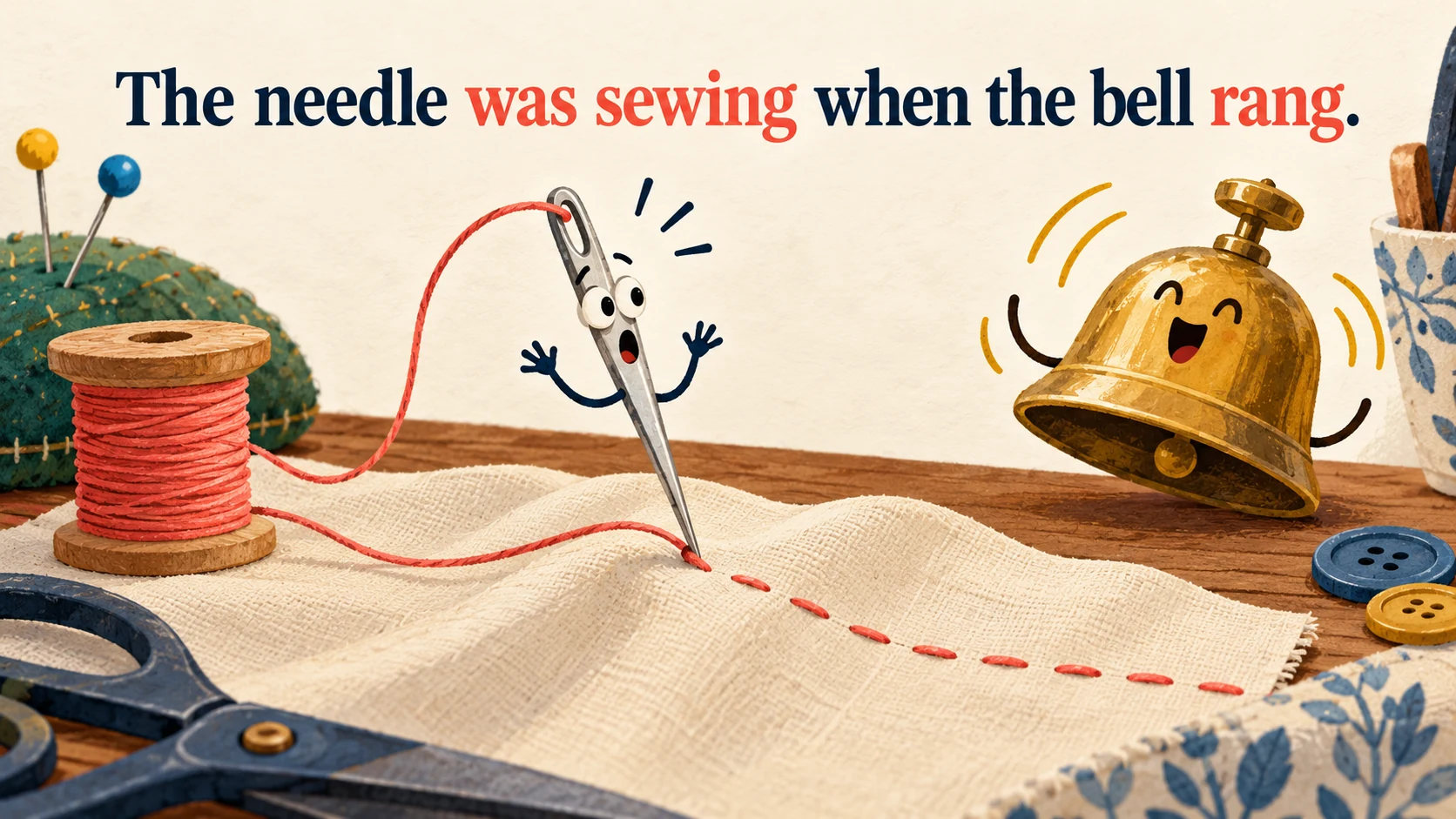
“I was walking home when I saw Maya.” One action was already happening; the other happened during it.
Two views of the past
Use the past simple to report a completed event: Maya called me. Use the past continuous (was/were + -ing) to show an activity in progress at a past moment: I was walking home.
Put them together to show how events relate:
I was walking home when Maya called me.
The walk was in progress. The call happened during it. The continuous form gives the background; the past simple moves the story forward.
The tense changes the picture
Imagine Anna arriving while you prepare dinner.
| Sentence | What the listener pictures |
|---|---|
| When Anna arrived, I cooked dinner. | Anna arrived, and I then cooked dinner. |
| When Anna arrived, I was cooking dinner. | The cooking was already happening when she arrived. |
| I cooked dinner and washed the dishes. | Two completed activities in sequence |
| I was cooking while Anna was washing the dishes. | Two activities happening at the same time |
The second sentence does not tell us when cooking started or finished. It only tells us that Anna's arrival happened inside the cooking period.
Cooking begins → Anna arrives during the cooking → cooking continues or ends later
Both tenses describe the past. The choice is about whether you present the event as a whole or from inside an activity.
Build the forms separately
For past simple negatives and questions, use did + base verb: I didn't cook; Did you cook? With be, use was/were directly: Was the kitchen busy?
For the past continuous, use was/were + -ing: I wasn't cooking; Were you cooking? Avoid mixing the helpers: Did you were cooking? is incorrect.
Regular past verbs take -ed, but many common verbs are irregular: go → went, see → saw, hear → heard. Continuous forms keep the base meaning and add -ing: going, seeing, hearing, where that activity meaning is appropriate.
When and while
When often introduces the shorter event: We were eating when the lights went out.
While often introduces an ongoing activity: While we were eating, the lights went out.
These are useful patterns, but when and while do not choose the tense for you. The meaning does. Two activities can happen at the same time: While I was cooking, my brother was setting the table.
Tell a clear story
Compare:
- I dropped my phone and it broke. Two completed events in sequence.
- I was taking a photo when I dropped my phone. An event happened during an activity.
- People were talking quietly. Suddenly, the alarm rang. Background, then main event.
A time expression can make the viewpoint clear: At nine, I was working describes what was in progress at nine.
Tell a story in the order your reader needs
I was waiting outside the cinema when I saw a familiar face. It was my old classmate. We said hello, bought tickets and went inside. While we were finding our seats, the lights went down.
Was waiting establishes the background. Saw, said, bought and went move the sequence forward. Were finding places us inside another activity; went down gives the event during it.
You do not need a continuous tense for every action that takes time. We watched a two-hour film is natural because the speaker presents the film viewing as complete. At nine, we were watching the film gives an inside viewpoint.
When can connect a sequence too: When I finished the email, I sent it. Finishing is followed by sending. While often highlights a shared period: While I was writing, my phone rang. These words help organise the meaning, but they do not automatically decide the tense.
For ordinary state meanings, choose simple forms: I knew the address, not I was knowing the address. I was thinking about the address describes an activity, so it can be continuous.
If you are unsure, first write what happened in plain order. Then ask whether you need to show one event happening during another. I took a photo. I dropped my phone becomes I was taking a photo when I dropped my phone when you want to connect the two. The tense now tells the reader how the events fit together.
Sources and further reading
Try this structure in a short practice set with instant feedback.
Start practice